
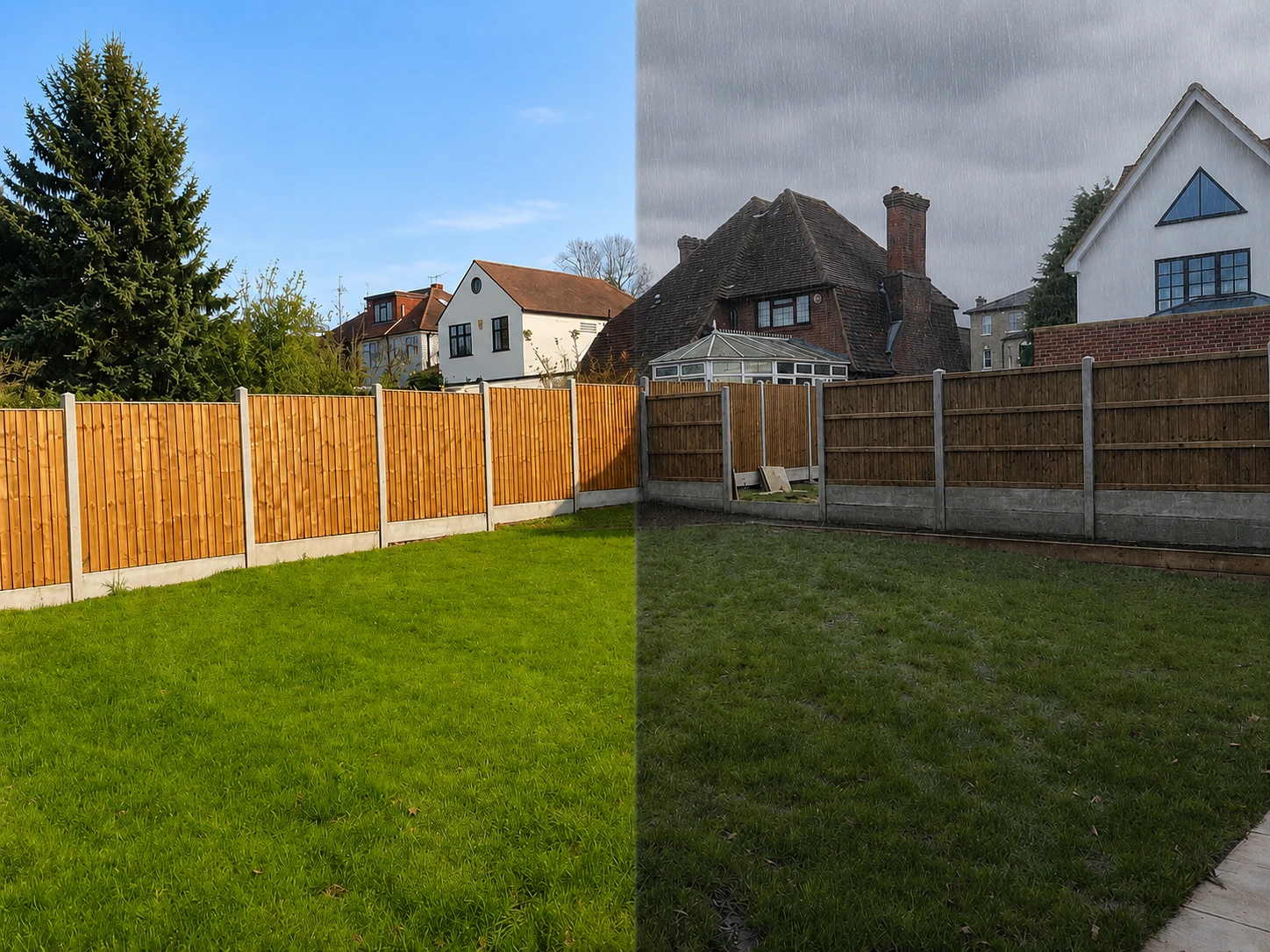
When Is the Best Time to Install a Fence in the UK? A Season-by-Season Guide
Fence installs happen year round in the UK, but each season has its own quirks. Some make the job easier, some affect availability or lead times, and some are simply more convenient to live with while the work is happening.
This is a straightforward look at the trade-offs of each season, with a few practical pointers at the end on how to choose the right window for your project.
The Short Answer
For most people, the easiest window is late spring through to early autumn. The ground is workable, the weather is reasonably stable, and timber can be treated or finished without rain getting in the way.
But that’s not the whole picture. A competent installer can put up a fence in almost any conditions with the right preparation, and there are good reasons to consider the quieter seasons too. Below is the season-by-season breakdown.
Spring (March to May)
One of the busiest fencing periods of the year. The weather is settling, the ground is drying out from winter, and people are getting back into their gardens.
What works in your favour: The soil is firming up but still soft enough to dig post holes without a fight. Daylight hours are improving. And if you book in early spring, your fence is finished and ready before the summer when you’re actually using the garden.
What to watch out for: April and May can be wet. Concrete posts are unaffected by rain, but timber treatment can be delayed. Demand also picks up sharply through spring, so popular installers and stock items book up fast.
Summer (June to August)
The peak season. Long days, dry ground, and the strongest motivation to get the garden sorted.
What works in your favour: The longest working days of the year, meaning bigger jobs can be finished in fewer site visits. Dry ground makes handling materials easier. Timber treatment dries quickly and cleanly.
What to watch out for: A long dry spell can actually make digging harder, not easier. Compacted clay soil gets very tough after weeks without rain. This is also when installers are most stretched and lead times can extend to several weeks. Popular stock items move quickly, so booking ahead matters.
Autumn (September to November)
Often underrated. The summer rush has passed, weather is usually reasonable into October, and there’s time to get a new fence in before winter properly arrives.
What works in your favour: Quieter demand means more availability from installers and suppliers. Ground conditions are usually still good for digging. And there’s the practical bonus of getting the install done before winter storms test your boundary.
What to watch out for: Shorter days from late October cut into working hours. Wetter weather can affect timber finishing tasks more than the install itself. Worth clearing leaves and debris from the boundary line before fitting starts.
Winter (December to February)
Winter installs are common, especially storm replacements, but the season needs more careful planning than the others.
What works in your favour: Off-peak demand often means better availability and sometimes better pricing. Concrete posts can be installed in cold conditions without issue (concrete cures fine at typical UK winter temperatures). And if a storm has brought your fence down, waiting for spring isn’t always practical.
What to watch out for: Frozen or waterlogged ground are the two biggest obstacles. Either can make digging slow or impossible. Daylight is short, so jobs spread across more days. Timber treatment should be left until spring as most products need dry conditions and temperatures above freezing to cure. And high winds will pause any sensible installer mid-job, so build flexibility into your dates.
How to Choose Your Window
The right time depends on what you’re trying to achieve:
- Fence ready for summer: book in late winter or early spring.
- Easiest, most flexible install: late spring or early autumn.
- Replacing storm damage: don’t wait. Any season works if security or use of the garden is affected.
- Tight budget with flexible timing: ask installers about quieter periods, often late autumn into winter.
- Trade contractors planning ahead: confirm stock and lead times early in spring before peak season hits.
A Few Things That Help in Any Season
Regardless of when you install, a few things make every fence project go more smoothly:
- Measure properly before ordering, and agree the boundary line with your neighbour if it’s shared.
- Use concrete posts rather than timber. They don’t rot at ground level and make panel replacement straightforward later.
- Use gravel boards at the base of each panel to keep the timber clear of soil and standing water.
- Source from a supplier who actually holds stock. Mid-job shortages are the most common cause of delays.
- Don’t book a tight weather window. Allow a few extra days for the unexpected.
Planning a fence install? Request a quote or call 01268 520078.
About Met Concrete Supplies
Met Concrete Supplies has been manufacturing fencing products in Basildon for over 30 years. We supply trade and domestic customers across Essex and into Kent, including Basildon, Brentwood, Chelmsford, Southend and Colchester. All concrete products are manufactured on site, wet cast and steel reinforced.