
Quick answer
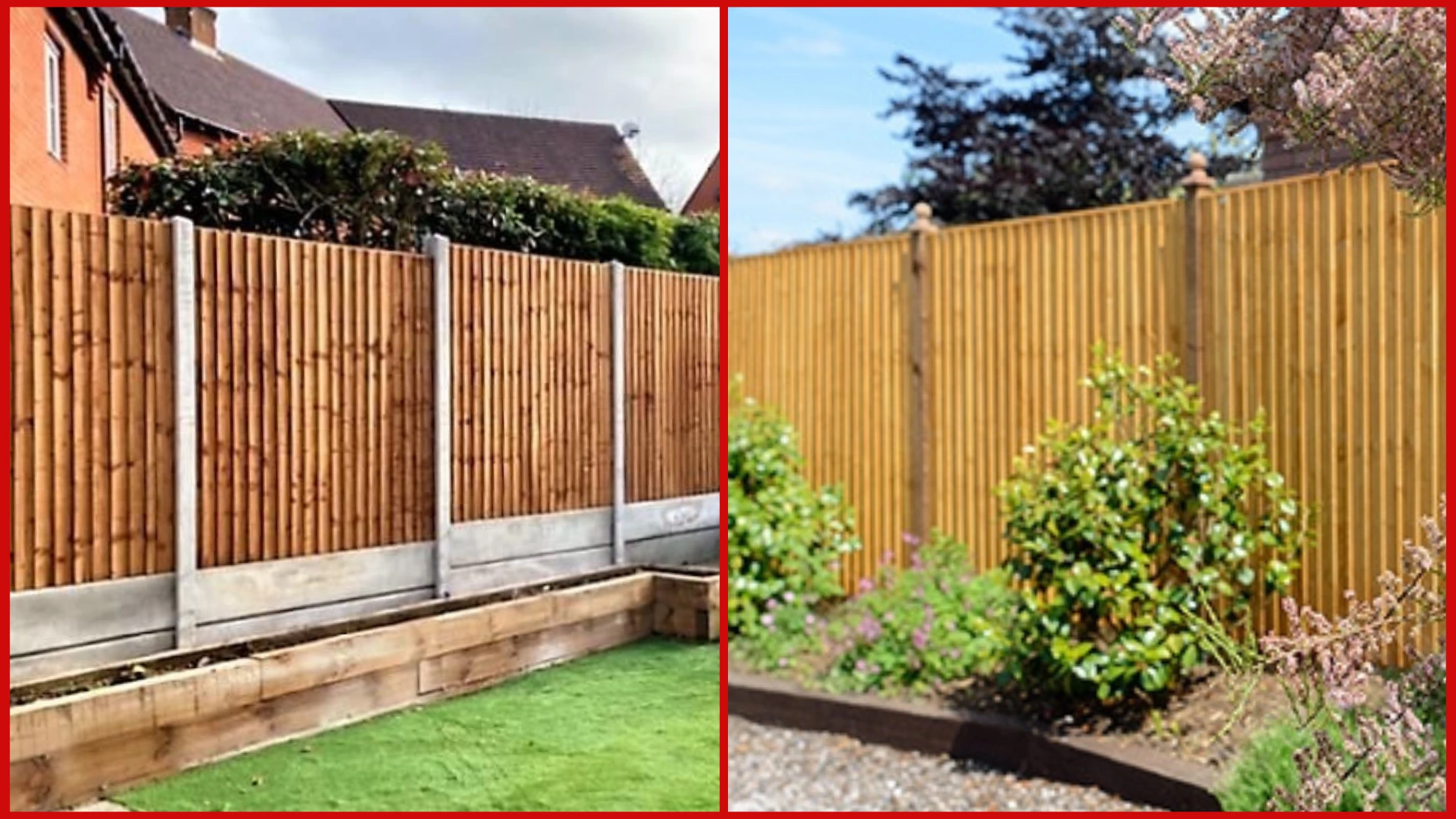
Concrete fence posts last 25 years or more, resist rot, and hold up to storms far better than timber. Wooden posts look warmer and cost less upfront, but typically need replacing every 7 to 15 years depending on the wood and treatment. For most UK gardens, concrete posts paired with feather edge panels and a concrete gravel board are the sensible long term choice. Wooden posts only make sense if you want a fully natural look and you are happy to replace them within a decade.
At a glance:
| Factor | Concrete posts | Wooden posts |
|---|---|---|
| Typical lifespan | 25 years plus | 7 to 15 years |
| Cost per post (supply) | £15 to £35 | £8 to £25 |
| Rot risk | None | High at ground level |
| Wind resistance | Excellent | Moderate |
| Installation weight | Heavy, two person lift | Light, one person |
| Repairs | Replace panel only | Often replace post and panel |
| Appearance | Industrial, paintable | Warm, traditional |
| Best for | Long term, exposed sites, boundary fencing | Short term, rural, decorative runs |
Why the post is the part that matters
Most people obsess over fence panels. The panel is what you see, so it gets the attention. But the post is what fails first, and when a post goes, the whole run comes down.
Nearly every fence collapse we see in Essex comes from posts rotting at ground level, not panels falling apart. That rot line sits about an inch below the soil, where the wood stays damp but gets enough oxygen for fungi to thrive. A decent feather edge panel will often outlast the post holding it up, especially once wooden posts hit the ten year mark.
This is why the concrete versus timber decision matters so much. Get the post right and you solve the biggest weakness in any garden fence.
Lifespan and durability
Concrete fence posts last 25 years or longer with no maintenance beyond the occasional wash. They are reinforced with steel rebar inside and cast from a dense concrete mix that resists moisture, frost damage, and ground contact. They do not rot, warp, split, or attract insects. The only real threats are impact damage from vehicles, ground movement on unstable clay, or poor quality posts that crack under stress.
All of our concrete fence posts are reinforced to BSI standards, which is the benchmark you want to look for. Cheaper imports often skip the rebar or use a weaker aggregate mix, and they start to spall and crumble within five or six years.
Wooden posts have a much shorter working life. A standard pressure treated softwood post buried directly in soil will last 7 to 10 years in Essex conditions. Higher grades of pressure treatment (UC4 rated for in ground contact) can push that to 12 to 15 years. Hardwood posts like oak can last longer again, but the cost per post moves well above the concrete alternative.
The number everyone quotes is the pressure treatment warranty, which can be 15 or even 25 years. Worth knowing that these warranties usually cover manufacturing defects only and not actual performance in the ground. Real world lifespan is almost always shorter than the warranty suggests.
If your posts are going straight into soil rather than set in concrete, halve every lifespan figure above.
Cost: upfront vs total cost over 25 years
Wooden posts look cheaper at the till. Over the life of the fence, they rarely are.
Upfront cost comparison for a 20 metre garden fence (10 panels, 11 posts):
| Item | Concrete posts | Wooden posts |
|---|---|---|
| 11 posts | £220 to £385 | £88 to £275 |
| 10 feather edge panels | £350 to £500 | £350 to £500 |
| Gravel boards | £110 to £180 | £60 to £120 |
| Postcrete (2 bags per post) | £110 | £110 |
| Labour (if installed) | £600 to £900 | £500 to £800 |
| Total | £1,390 to £2,075 | £1,108 to £1,805 |
So yes, wooden works out £280 to £400 cheaper on day one.
Now look at the 25 year cost. Assuming wooden posts need replacing twice in that window, plus the labour and damaged panels that usually come with it:
| Concrete route | Wooden route | |
|---|---|---|
| Initial install | £1,700 | £1,400 |
| Year 10 post replacement | £0 | £900 |
| Year 20 post replacement | £0 | £1,100 |
| Total over 25 years | £1,700 | £3,400 |
Concrete works out roughly half the cost over the realistic life of a boundary. And that’s before you factor in the hassle of digging out rotten stumps, sourcing matching panels, and the weekend lost to the job.
Prices above are indicative Essex retail rates for 2026. For a firm quote on your specific project, have a look at our fence post range or get in touch for a tailored estimate.
Installation: what’s actually involved
Concrete posts are heavy. A standard 8 foot slotted inter weighs around 40 to 45 kg. That’s a two person lift, and positioning it plumb in a post hole while someone else mixes postcrete is a job that can take a bit of practice. Most installers bed concrete posts in a dry mix postcrete collar, tamped and levelled, then allow 24 hours before hanging panels.
The upside is that once a concrete post is set, it’s set forever. Panels slot into the channels down the sides of the post and get held in place by gravity and the weight of the gravel board. No nails, no brackets, no fiddling.
Wooden posts are much easier to handle. A softwood 4 by 4 post weighs around 8 kg, which any adult can position single handed. They can be concreted in or driven into metal post spikes for quicker installs, though post spikes significantly reduce lifespan because the metal conducts moisture up into the grain.
The trade off with wooden is that the panels need to be nailed or screwed in place, which means that when you eventually replace a post, you usually damage the adjoining panel in the process. With concrete slotted posts, you just lift the old panels out and slide new ones in. No demolition.
For bigger jobs, professional installation pays for itself in time and finish quality. We offer a full supply and fit service across Essex and the South East if you’d rather not do it yourself.
Appearance: the honest take
This is where wooden wins, and there’s no point pretending otherwise. A fresh wooden fence looks warmer, more natural, and sits better in traditional gardens and rural settings. The grain, the colour, the way it weathers. It’s just nicer to look at than grey concrete.
Concrete posts are industrial by default. They’re grey, angular, and functional. That said, they can be painted with a masonry paint to match your scheme (dark greys and charcoals work particularly well), and once panels are installed, the post face shows very little. From the street side of a typical feather edge fence, you can barely tell the posts are concrete at all.
Wooden posts go silver grey after 12 to 18 months if left untreated, and they need annual staining or treatment to hold their original colour. That’s not a dealbreaker, but it’s a job that gets forgotten and ignored, which is a big part of why they fail early.
If aesthetics are your top priority and you’re willing to accept the shorter lifespan and higher long term cost, wooden is the choice. For almost every other situation, concrete wins once you’ve hung the panels.
Which to choose for your situation
Go with concrete posts if:
- You want a fence you won’t have to think about for two decades or more
- Your garden is exposed to wind (coastal sites, elevated gardens, corners of terraced rows)
- You’re replacing a fence that has already failed once
- You’re fencing a rental property where tenant damage and maintenance calls are a concern
- You want to add a concrete gravel board underneath (the two lock together properly)
- You’re installing security or boundary fencing for a commercial site
Go with wooden posts if:
- You’re fencing a rural or cottage style garden where the aesthetic matters more than longevity
- You’re putting up a temporary or decorative internal fence, not a main boundary
- You have the time and inclination to maintain them with annual treatment
- You’re planning to replace the whole fence within ten years anyway (for example, as part of a planned landscaping project)
For most Essex homeowners, a concrete post plus concrete gravel board plus timber feather edge panel setup gives you the best of both. The posts and board handle the ground level moisture, the timber panel gives you the warm look, and the whole thing lasts 20 years plus with almost no maintenance.
Where to buy fencing supplies in Essex
We’ve been supplying concrete fence posts, gravel boards, and timber fencing products across Essex, London, and the South East for over 30 years. Our yard is on Burnt Mills Industrial Estate in Basildon, just off the A127, with easy access for collection or delivery across the region.
All of our concrete products are manufactured to British Standard specifications and we carry a full range of sizes including:
- Slotted intermediate posts in 5ft, 6ft, 7ft, 8ft and 9ft
- Slotted corner and end posts for run terminations
- Mortice posts for traditional post and rail
- Recessed posts for closeboard and feather edge
- Concrete gravel boards in 6 inch and 12 inch depths
- Feather edge fence panels and made to measure gates
We deliver to Basildon, Chelmsford, Colchester, Southend, and across Essex, with bulk discounts on larger orders. Collections are usually available within an hour of ordering.
Not sure how many posts you need? Use our fence post calculator or give us a call on 01268 520078 and we’ll work it out with you.
Frequently asked questions
Are concrete fence posts better than wooden?
For longevity, cost over time, and resistance to rot and wind, concrete fence posts are better than wooden in almost every practical sense. Wooden posts only beat concrete on upfront cost and appearance. For a typical UK garden boundary that you want to forget about for 20 years, concrete is the right choice.
How long do concrete fence posts last?
Concrete fence posts last 25 years or longer when manufactured to British Standard specifications and installed correctly. We regularly see posts that have been in the ground for 30 or 40 years still holding fence panels solidly.
How much does a concrete fence post cost in the UK?
Supply cost for a standard 8 foot slotted concrete intermediate post ranges from £15 to £35 in 2026, depending on specification, local availability, and order volume. Corner and end posts cost slightly more because of the different profile. Bulk pricing on orders of 20 or more posts brings the unit cost down significantly.
Can you paint concrete fence posts?
Yes, concrete fence posts can be painted with any exterior masonry paint. Dark colours like charcoal, slate, and black work particularly well and make the posts almost disappear behind the panels. Allow new posts to cure for at least 28 days before painting, and clean the surface with a stiff brush first.
Do I need planning permission for a fence in Essex?
Most garden fences do not require planning permission if they are under 2 metres high, or under 1 metre high next to a road. Listed buildings, conservation areas, and properties with permitted development rights removed are exceptions. Check with your local council before starting work if you’re unsure.
Can I mix concrete posts with wooden panels?
Yes, and this is actually the most popular combination in UK gardens. Slotted concrete posts are designed specifically to hold timber feather edge, closeboard, or overlap panels. You get the durability of concrete underground and the warmth of timber above ground.
How deep should concrete fence posts be set?
As a rule, bury a third of the post length for fences up to 6 feet, and at least two feet minimum for anything taller. An 8 foot post should have 2 to 2.5 feet below ground, set in postcrete for stability. Deeper holes mean stronger fences, especially on clay soil or exposed sites.
Looking for fencing supplies in Essex? Call MET Concrete Supplies on 01268 520078 or request a free quote online. Over 30 years experience, delivery across Essex, London, and the South East, and bulk discounts on all orders.